Highlights
Quote
This week Japan’s bond market suffered a major selloff, with yields hitting an all-time high.
Quote
Ten-year yields spiked to 2.2%, while 30-year yields hit 3.66%.
Quote
This, warned Citadel CEO Ken Griffin, should be a cautionary tale to the U.S., where yields neared the danger benchmark of 5% this week.
Quote
“I think there’s an explicit warning that if your fiscal house is not in order, the bond vigilantes can come out and retract their price,” Griffin said at a Bloomberg event in Davos.
Quote
The 5% threshold is a concern for investors because it’s the point at which holding U.S. debt is comparable to the returns on stocks. This is a worry because bonds are seen as a stable, low-risk component of a balanced portfolio; if yields are at a level comparable to stocks, then risk may also be too high for investors who want stability.
Quote
“What’s particularly troubling is … when bonds and stocks move together in price, then bonds are no longer a hedge for your equity portfolio, and they lose a substantial part of what makes them so special in constructing a portfolio,” Griffin said.
Quote
Yields spiked as speculation mounted over how Europe and its investors would respond: namely, whether they would continue to hold U.S. debt.
Quote
National debt now exceeds 270 billion in debt interest payments alone in the final three months of fiscal year 2025.
Quote
“If U.S. Treasuries are viewed as being at risk because the United States is not seen as creditworthy, then bonds and stocks will move together in price. That will result in bonds having a much higher demand yield in the marketplace, so mortgage rates will be higher; the cost for us to finance our deficits will be higher,” Griffin said.
Quote
Yields fell fairly rapidly after President Trump delivered yet another TACO trade (Trump always chickens out) and unwound his tariff threat on European nations. Likewise, 30-year bonds are sitting between 4% and 5%, in keeping with the general trend of the past few years.
Quote
“The U.S. has so much wealth, we can maintain this level of deficit spending for some period of time. But the longer we wait to change direction, the more draconian the consequences will be of that change.”
Clean Copy
Ken Griffin says America was sent an ‘explicit warning’ from the bond market, and it’s time to get the national debt in order
By Eleanor Pringle
Senior Reporter, Economics and Markets
January 22, 2026, 6:38 AM ET
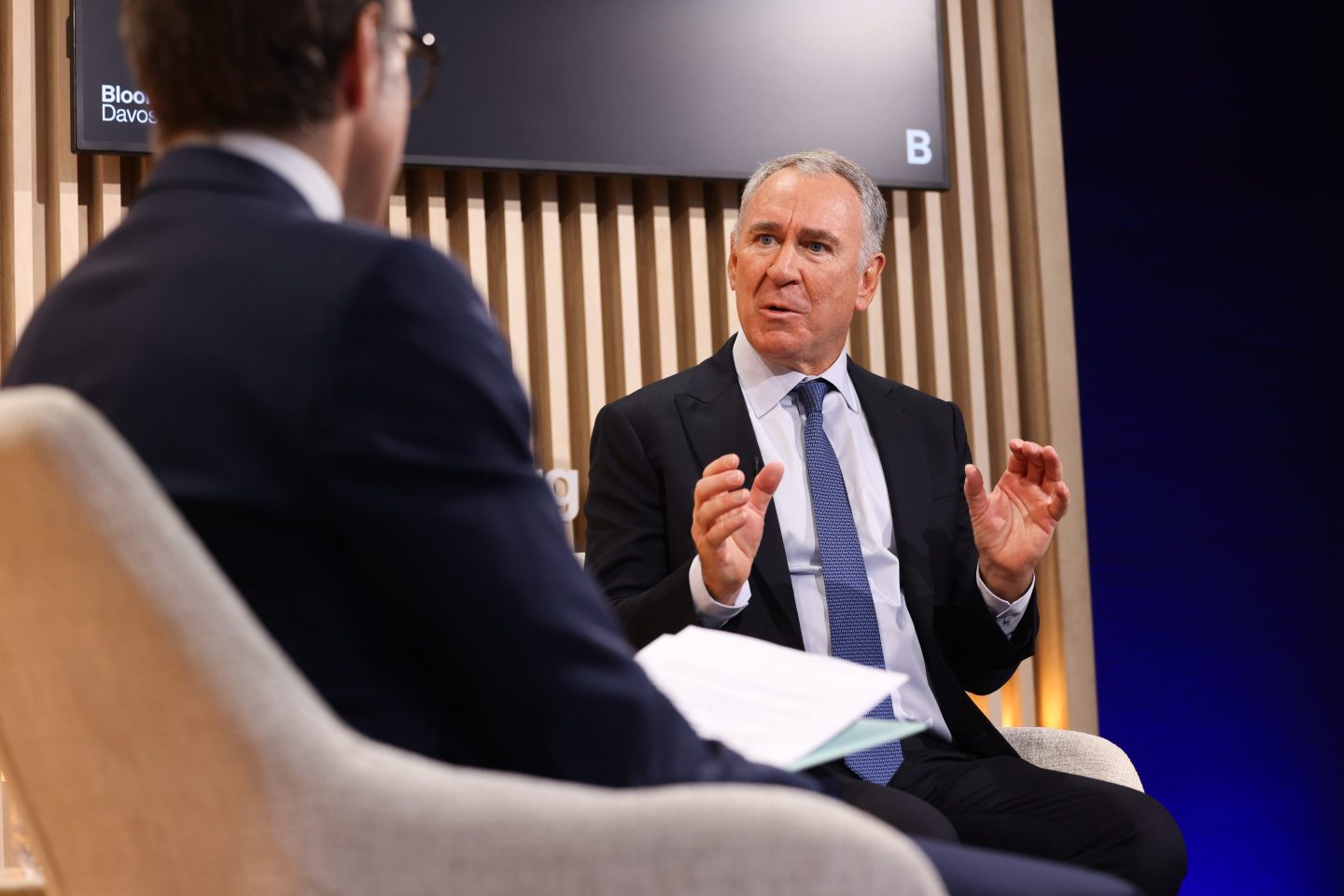
Ken Griffin, CEO of Citadel, at the World Economic Forum meeting at Davos, Switzerland, Jan. 21, 2026. Chris Ratcliffe—Bloomberg/Getty Images
While it might appear that the most significant updates about the global economy are currently coming from a small town in the Swiss Alps, Tokyo may disagree. This week Japan’s bond market suffered a major selloff, with yields hitting an all-time high.
Ten-year yields spiked to 2.2%, while 30-year yields hit 3.66%. While the onset of the selloff can’t be pinpointed, it is likely a combination of geopolitical tensions and simmering concerns about Prime Minister Sanae Takaichi’s ¥21.3 trillion ($134 billion) economic plan to bolster Japan’s debt-heavy economy.
This, warned Citadel CEO Ken Griffin, should be a cautionary tale to the U.S., where yields neared the danger benchmark of 5% this week.
Recommended Video
“I think there’s an explicit warning that if your fiscal house is not in order, the bond vigilantes can come out and retract their price,” Griffin said at a Bloomberg event in Davos.
The 5% threshold is a concern for investors because it’s the point at which holding U.S. debt is comparable to the returns on stocks. This is a worry because bonds are seen as a stable, low-risk component of a balanced portfolio; if yields are at a level comparable to stocks, then risk may also be too high for investors who want stability.
“What’s particularly troubling is … when bonds and stocks move together in price, then bonds are no longer a hedge for your equity portfolio, and they lose a substantial part of what makes them so special in constructing a portfolio,” Griffin said.
U.S. Treasuries had a shaky week after President Trump announced over the weekend that a bevy of European nations would face additional tariffs if they did not support his bid to purchase Greenland. Yields spiked as speculation mounted over how Europe and its investors would respond: namely, whether they would continue to hold U.S. debt.
The speculation bothered Treasury Secretary Scott Bessent, who claimed that Deutsche Bank’s CEO called him personally to apologize for a note published by his institution over the weekend, which suggested European investors may vote with their feet in response to Trump’s threats. Deutsche’s note was one of many that suggested Treasuries could be used to right-size Trump’s plan, including UBS’s Paul Donovan, who suggested Uncle Sam’s deficits were the nation’s “Achilles’ heel.”
A U.S. funding issue
While recent yield shifts have resulted from short-term foreign policy, this does lay bare the broader question about U.S. funding. National debt now exceeds 270 billion in debt interest payments alone in the final three months of fiscal year 2025. Everyone from JPMorgan Chase CEO Jamie Dimon to Fed Chair Jerome Powell are concerned not necessarily about the value of the nation’s debt, but its borrowing in relation to its economic growth.
While some might argue a debt crisis will never come to pass because the Federal Reserve can simply print more money (inflationary in its own right), others fear investors at some point will feel the U.S. has reached an unstable spending threshold and demand higher returns as a result.
“If U.S. Treasuries are viewed as being at risk because the United States is not seen as creditworthy, then bonds and stocks will move together in price. That will result in bonds having a much higher demand yield in the marketplace, so mortgage rates will be higher; the cost for us to finance our deficits will be higher,” Griffin said.
So far, investors seem relatively sanguine about America’s fiscal trajectory. Yields fell fairly rapidly after President Trump delivered yet another TACO trade (Trump always chickens out) and unwound his tariff threat on European nations. Likewise, 30-year bonds are sitting between 4% and 5%, in keeping with the general trend of the past few years.
That confidence may not last forever, added Griffin. While the nation is not currently “playing with fire,” he warned: “The U.S. has so much wealth, we can maintain this level of deficit spending for some period of time. But the longer we wait to change direction, the more draconian the consequences will be of that change.”
Join us at the Fortune Workplace Innovation Summit May 19–20, 2026, in Atlanta. The next era of workplace innovation is here—and the old playbook is being rewritten. At this exclusive, high-energy event, the world’s most innovative leaders will convene to explore how AI, humanity, and strategy converge to redefine, again, the future of work. Register now.
About the Author
By Senior Reporter, Economics and Markets
Eleanor Pringle is an award-winning senior reporter at Fortune covering news, the economy, and personal finance. Eleanor previously worked as a business correspondent and news editor in regional news in the U.K. She completed her journalism training with the Press Association after earning a degree from the University of East Anglia.
Related Articles
 economy
Ken Griffin has a warning for Trump and the GOP: ‘I would not underestimate how grating a 3% inflation rate could be’ on Americans
By economy
America’s economy is on a ‘sugar high’ warns Ken Griffin, and investors retreating to gold is one sign of a comedown
By
When the bond market sneezes, corporate America worries about a ‘debt-induced heart attack’
By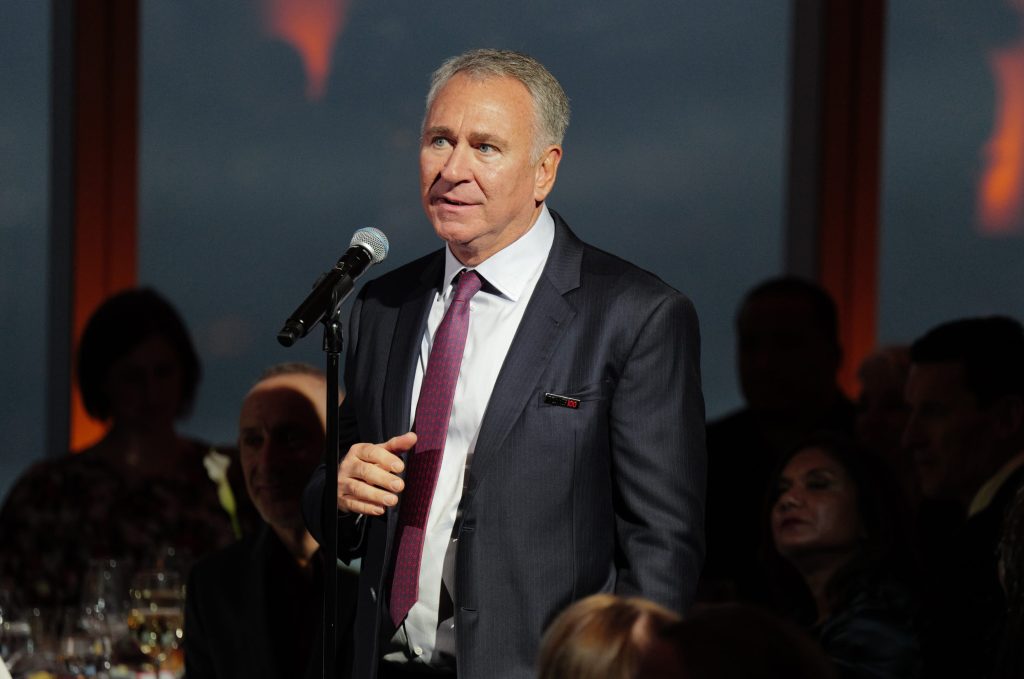 politics
Ken Griffin says CEOs lining up to beg Trump for tariff exemptions is ‘nauseating’—and that the White House showing ‘favor’ undermines the American story
By politics
Citadel founder Ken Griffin says executives are more worried over tariffs than they were during the Great Financial Crisis
By
Latest in Economy

By January 23, 2026
27 minutes ago
By January 23, 2026
2 hours ago

By and January 23, 2026
5 hours ago
The real cost of job automation isn’t economic, it’s identity
By January 23, 2026
6 hours ago
By January 23, 2026
8 hours ago
By January 23, 2026
8 hours ago
Most Popular
By January 22, 2026
1 day ago
By January 21, 2026
2 days ago
By January 22, 2026
1 day ago
Jamie Dimon tells Davos: ‘You didn’t do a particularly good job making the world a better place’
By January 21, 2026
2 days ago

Denmark offered to trade Greenland to the U.S. in 1910—and America thought it was crazy
By and January 22, 2026
1 day ago
Annotated Copy
Ken Griffin says America was sent an ‘explicit warning’ from the bond market, and it’s time to get the national debt in order
By Eleanor Pringle
Senior Reporter, Economics and Markets
January 22, 2026, 6:38 AM ET
Ken Griffin, CEO of Citadel, at the World Economic Forum meeting at Davos, Switzerland, Jan. 21, 2026. Chris Ratcliffe—Bloomberg/Getty Images
While it might appear that the most significant updates about the global economy are currently coming from a small town in the Swiss Alps, Tokyo may disagree. This week Japan’s bond market suffered a major selloff, with yields hitting an all-time high.
Ten-year yields spiked to 2.2%, while 30-year yields hit 3.66%. While the onset of the selloff can’t be pinpointed, it is likely a combination of geopolitical tensions and simmering concerns about Prime Minister Sanae Takaichi’s ¥21.3 trillion ($134 billion) economic plan to bolster Japan’s debt-heavy economy.
This, warned Citadel CEO Ken Griffin, should be a cautionary tale to the U.S., where yields neared the danger benchmark of 5% this week.
Recommended Video
“I think there’s an explicit warning that if your fiscal house is not in order, the bond vigilantes can come out and retract their price,” Griffin said at a Bloomberg event in Davos.
The 5% threshold is a concern for investors because it’s the point at which holding U.S. debt is comparable to the returns on stocks. This is a worry because bonds are seen as a stable, low-risk component of a balanced portfolio; if yields are at a level comparable to stocks, then risk may also be too high for investors who want stability.
“What’s particularly troubling is … when bonds and stocks move together in price, then bonds are no longer a hedge for your equity portfolio, and they lose a substantial part of what makes them so special in constructing a portfolio,” Griffin said.
U.S. Treasuries had a shaky week after President Trump announced over the weekend that a bevy of European nations would face additional tariffs if they did not support his bid to purchase Greenland. Yields spiked as speculation mounted over how Europe and its investors would respond: namely, whether they would continue to hold U.S. debt.
The speculation bothered Treasury Secretary Scott Bessent, who claimed that Deutsche Bank’s CEO called him personally to apologize for a note published by his institution over the weekend, which suggested European investors may vote with their feet in response to Trump’s threats. Deutsche’s note was one of many that suggested Treasuries could be used to right-size Trump’s plan, including UBS’s Paul Donovan, who suggested Uncle Sam’s deficits were the nation’s “Achilles’ heel.”
A U.S. funding issue
While recent yield shifts have resulted from short-term foreign policy, this does lay bare the broader question about U.S. funding. ==National debt now exceeds 270 billion in debt interest payments alone in the final three months of fiscal year 2025.== Everyone from JPMorgan Chase CEO Jamie Dimon to Fed Chair Jerome Powell are concerned not necessarily about the value of the nation’s debt, but its borrowing in relation to its economic growth.
While some might argue a debt crisis will never come to pass because the Federal Reserve can simply print more money (inflationary in its own right), others fear investors at some point will feel the U.S. has reached an unstable spending threshold and demand higher returns as a result.
“If U.S. Treasuries are viewed as being at risk because the United States is not seen as creditworthy, then bonds and stocks will move together in price. That will result in bonds having a much higher demand yield in the marketplace, so mortgage rates will be higher; the cost for us to finance our deficits will be higher,” Griffin said.
So far, investors seem relatively sanguine about America’s fiscal trajectory. Yields fell fairly rapidly after President Trump delivered yet another TACO trade (Trump always chickens out) and unwound his tariff threat on European nations. Likewise, 30-year bonds are sitting between 4% and 5%, in keeping with the general trend of the past few years.
That confidence may not last forever, added Griffin. While the nation is not currently “playing with fire,” he warned: “The U.S. has so much wealth, we can maintain this level of deficit spending for some period of time. But the longer we wait to change direction, the more draconian the consequences will be of that change.”
Join us at the Fortune Workplace Innovation Summit May 19–20, 2026, in Atlanta. The next era of workplace innovation is here—and the old playbook is being rewritten. At this exclusive, high-energy event, the world’s most innovative leaders will convene to explore how AI, humanity, and strategy converge to redefine, again, the future of work. Register now.
About the Author
By Senior Reporter, Economics and Markets
Eleanor Pringle is an award-winning senior reporter at Fortune covering news, the economy, and personal finance. Eleanor previously worked as a business correspondent and news editor in regional news in the U.K. She completed her journalism training with the Press Association after earning a degree from the University of East Anglia.
Related Articles
-
economy
Ken Griffin has a warning for Trump and the GOP: ‘I would not underestimate how grating a 3% inflation rate could be’ on Americans
By -
economy
America’s economy is on a ‘sugar high’ warns Ken Griffin, and investors retreating to gold is one sign of a comedown
By -
When the bond market sneezes, corporate America worries about a ‘debt-induced heart attack’
By -
politics
Ken Griffin says CEOs lining up to beg Trump for tariff exemptions is ‘nauseating’—and that the White House showing ‘favor’ undermines the American story
By -
politics
Citadel founder Ken Griffin says executives are more worried over tariffs than they were during the Great Financial Crisis
By
Latest in Economy
By January 23, 2026
27 minutes ago
By January 23, 2026
2 hours ago
By and January 23, 2026
5 hours ago
The real cost of job automation isn’t economic, it’s identity
By January 23, 2026
6 hours ago
By January 23, 2026
8 hours ago
By January 23, 2026
8 hours ago
Most Popular
By January 22, 2026
1 day ago
By January 21, 2026
2 days ago
By January 22, 2026
1 day ago
Jamie Dimon tells Davos: ‘You didn’t do a particularly good job making the world a better place’
By January 21, 2026
2 days ago
Denmark offered to trade Greenland to the U.S. in 1910—and America thought it was crazy
By and January 22, 2026
1 day ago