Highlights
Quote
The great harmony of community isn’t when everyone has equal everything. It’s when responsibility, investment, stake, and trust are aligned. You want the people who are most invested, most trusted, and most accountable to be taking on more responsibility and more decisions. You want people to feel empowered to make decisions without everyone’s permission.
Quote
Chore wheels are the physical embodiment of a scarcity mindset. They assume:
Quote
nobody wants to contribute,
Quote
everyone must be coerced,
Quote
and fairness is enforced through accounting, not culture.
Quote
once you’ve done your assigned chore, you are done contributing
Quote
They turn care into compliance.
Quote
Instead, give people opportunities to voluntarily contribute in ways that match their energy and strengths — and then visibly appreciate those contributions
Quote
Bragging is underrated.
Scorekeeping is poison.
Quote
Most real communities are urban, ideologically mixed, and relentlessly practical.
Quote
The biggest problem with popular depictions of communal living is treating it as a niche lifestyle for a certain type of person: usually ideologically aligned and underemployed.
Quote
If communal living is going to matter at scale, it has to be a big tent.
Quote
Most people don’t want a commune. They want their life to be easier.
Clean Copy
How the New York Times gets it all so so very wrong
This one is a true gem.
It manages to pack almost every bad idea, tired stereotype, and well-meaning but destructive instinct about communal living into a single compact article. And yes, I know it’s all in jest. But allow me to take it way too seriously and dunk all over it anyway.
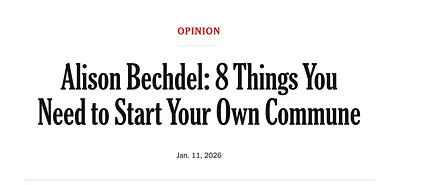
The NYT article is Alison Bechdel’s “8 Things You Need to Start Your Own Commune.” And it sort of an anti-Supernuclear.
Let’s go point by point.
Bad ideas
1. Egalitarianism is probably not the answer
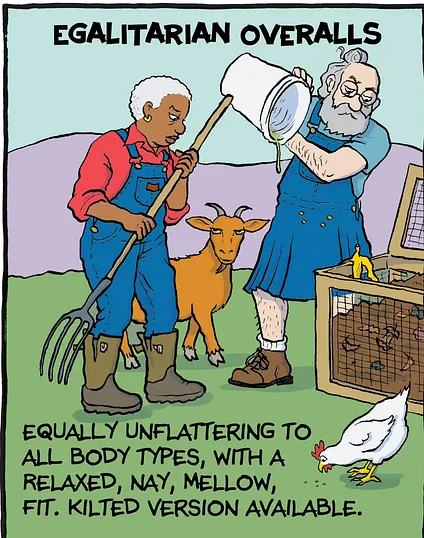
We’ve profiled a lot of successful communities. Very few of them operate as true egalitarian collectives. Almost all of them have some form of benevolent dictatorship or at least a clear place where the buck stops.
Egalitarianism just isn’t a good model of practical reality.
In real life:
- people contribute unequally.
- they care unequally.
- they invest different amounts.
- they need different resources (e.g. size/type of living space).
The great harmony of community isn’t when everyone has equal everything. It’s when responsibility, investment, stake, and trust are aligned. You want the people who are most invested, most trusted, and most accountable to be taking on more responsibility and more decisions. You want people to feel empowered to make decisions without everyone’s permission.
This doesn’t mean everyone else is voiceless. It means that different decisions need different sets of stakeholders. And not everyone always has equal stake.
If you want more on this, we’ve written at length about governance structures that actually work in communities — and spoiler: they don’t look like permanent consensus meetings.
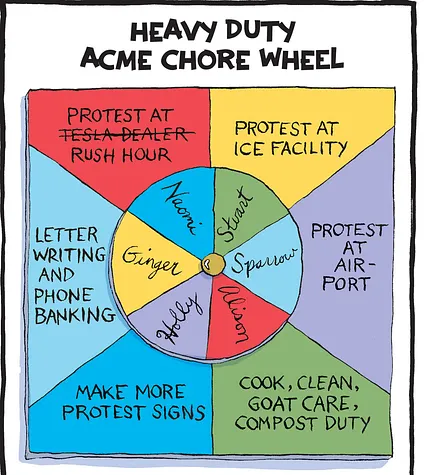
2. Chore wheels are transactional, scarcity-oriented, and guaranteed to create conflict
Don’t use them.
Chore wheels are the physical embodiment of a scarcity mindset. They assume:
- nobody wants to contribute,
- everyone must be coerced,
- and fairness is enforced through accounting, not culture.
- once you’ve done your assigned chore, you are done contributing
They turn care into compliance.
Instead, give people opportunities to voluntarily contribute in ways that match their energy and strengths — and then visibly appreciate those contributions. We prefer systems that reward initiative, status, and pride over resentment and enforcement.
Bragging is underrated.
Scorekeeping is poison.
And watch out for Cheryl
(For another perspective: Daniel disagrees with me on this…)
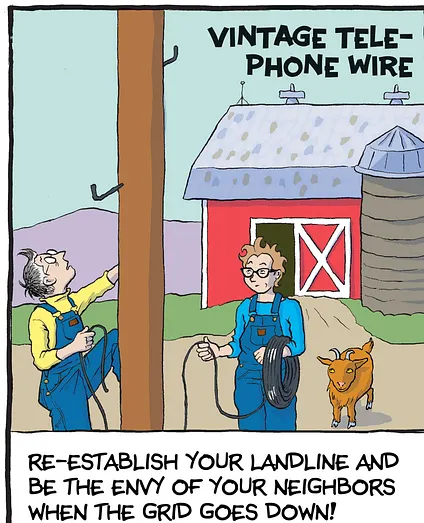
3. Scope creep will kill you
Starting a community is already hard. You should focus ruthlessly on the essentials.
Outsource the non-essential parts.
The classic example is cleaning shared spaces. Pay for it. Do not turn your friendships into a janitorial union.
Every extra system you internalize is another surface area for conflict. Leave the telecom infrastructure to Verizon.
4. “Everything bageling”

This is what Ezra Klein calls the “Everything Bagel” problem: the instinct to pile every good, righteous, interesting idea into one overstuffed project.
Your community does not need to solve climate change, late capitalism, and the loneliness epidemic simultaneously. It needs to be a good place to live.
Bad stereotypes
5. Polyamory as a core institution
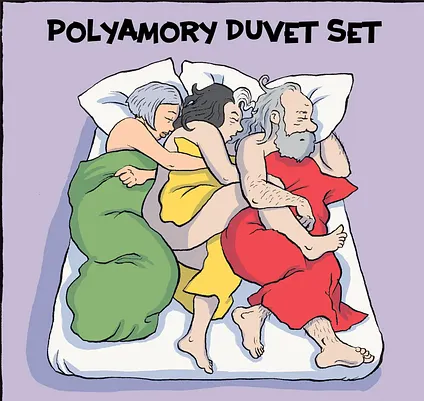
I know a lot of communities. Very few of them have dating within the community or polyamory as a central feature.
Housing is already emotionally complex. Adding romantic entanglement multiplies that complexity in ways most groups are wildly unprepared for. Gillian has written more about this.
6. Ideological echo-chambering

This one especially rankles me.
“Fly your freak flag”… but only if it matches an approved list of progressive values. Otherwise, please keep quiet.
This movement — if you want to call it that — deserves political diversity. And in practice, it has it. I’ve met immigrant families, religious communities, retirees, tech workers, artists, conservatives, radicals who choose to live in community. Some of these communities have an institutionalized set of political values … but most don’t.
Your community doesn’t need a political valence.Living together doesn’t have to be a manifesto. It can just be a statement about how life is best lived.
7. The rural commune myth
There’s a strong aesthetic bias in how communal living gets depicted: rural, pastoral, ideologically aligned, and vaguely pre-industrial.
It’s mostly fiction.
Most real communities are urban, ideologically mixed, and relentlessly practical. They exist to make modern life work better — not to escape it. They optimize for transit, jobs, schools, and human relationships, not goats and overalls.
Okay fine, this one I kind of like

One time, Radish sold out and shilled for a hard kombucha company and we all drank a little too much during the photoshoot. It was fun.
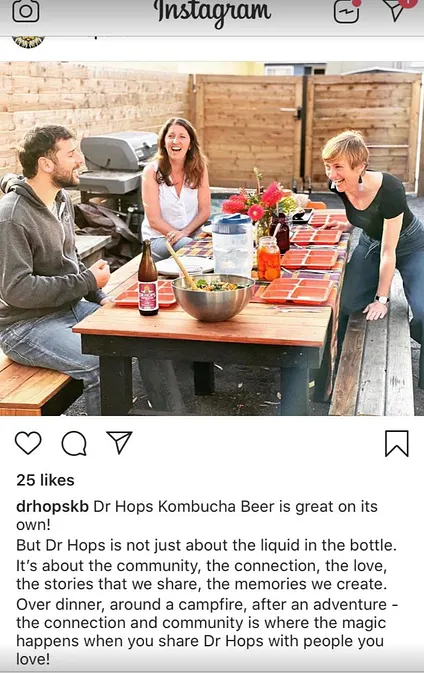
All of us should probably be drinking more hard booch. Endorse.
In conclusion….
The biggest problem with popular depictions of communal living is treating it as a niche lifestyle for a certain type of person: usually ideologically aligned and underemployed.
This is the small tent and narrow vision.
If communal living is going to matter at scale, it has to be a big tent. It has to work for people with jobs, kids, deadlines, politics they don’t want to debate at dinner, and a limited tolerance for meetings. It has to coexist with ambition, privacy, diversity of beliefs, and the reality that most adults are busy.
Most people don’t want a commune. They want their life to be easier.
They want shared childcare, reduced logistical burden, neighbors they trust, friends close at hand. They want community as infrastructure, not identity.
If communal living stays narrow and aesthetic, it stays small.
If it becomes adaptable, practical, and useful, it becomes normal.
Ms Bechdel has done us a disservice here, that this hasty diatribe hopes to correct.
/rant
Annotated Copy
How the New York Times gets it all so so very wrong
This one is a true gem.
It manages to pack almost every bad idea, tired stereotype, and well-meaning but destructive instinct about communal living into a single compact article. And yes, I know it’s all in jest. But allow me to take it way too seriously and dunk all over it anyway.
The NYT article is Alison Bechdel’s “8 Things You Need to Start Your Own Commune.” And it sort of an anti-Supernuclear.
Let’s go point by point.
Bad ideas
1. Egalitarianism is probably not the answer
We’ve profiled a lot of successful communities. Very few of them operate as true egalitarian collectives. Almost all of them have some form of benevolent dictatorship or at least a clear place where the buck stops.
Egalitarianism just isn’t a good model of practical reality.
In real life:
- people contribute unequally.
- they care unequally.
- they invest different amounts.
- they need different resources (e.g. size/type of living space).
The great harmony of community isn’t when everyone has equal everything. It’s when responsibility, investment, stake, and trust are aligned. You want the people who are most invested, most trusted, and most accountable to be taking on more responsibility and more decisions. You want people to feel empowered to make decisions without everyone’s permission.
This doesn’t mean everyone else is voiceless. It means that different decisions need different sets of stakeholders. And not everyone always has equal stake.
If you want more on this, we’ve written at length about governance structures that actually work in communities — and spoiler: they don’t look like permanent consensus meetings.
2. Chore wheels are transactional, scarcity-oriented, and guaranteed to create conflict
Don’t use them.
Chore wheels are the physical embodiment of a scarcity mindset. They assume:
- nobody wants to contribute,
- everyone must be coerced,
- and fairness is enforced through accounting, not culture.
- once you’ve done your assigned chore, you are done contributing
They turn care into compliance.
Instead, give people opportunities to voluntarily contribute in ways that match their energy and strengths — and then visibly appreciate those contributions. We prefer systems that reward initiative, status, and pride over resentment and enforcement.
Bragging is underrated.
Scorekeeping is poison.
And watch out for Cheryl
(For another perspective: Daniel disagrees with me on this…)
3. Scope creep will kill you
Starting a community is already hard. You should focus ruthlessly on the essentials.
Outsource the non-essential parts.
The classic example is cleaning shared spaces. Pay for it. Do not turn your friendships into a janitorial union.
Every extra system you internalize is another surface area for conflict. Leave the telecom infrastructure to Verizon.
4. “Everything bageling”
This is what Ezra Klein calls the “Everything Bagel” problem: the instinct to pile every good, righteous, interesting idea into one overstuffed project.
Your community does not need to solve climate change, late capitalism, and the loneliness epidemic simultaneously. It needs to be a good place to live.
Bad stereotypes
5. Polyamory as a core institution
I know a lot of communities. Very few of them have dating within the community or polyamory as a central feature.
Housing is already emotionally complex. Adding romantic entanglement multiplies that complexity in ways most groups are wildly unprepared for. Gillian has written more about this.
6. Ideological echo-chambering
This one especially rankles me.
“Fly your freak flag”… but only if it matches an approved list of progressive values. Otherwise, please keep quiet.
This movement — if you want to call it that — deserves political diversity. And in practice, it has it. I’ve met immigrant families, religious communities, retirees, tech workers, artists, conservatives, radicals who choose to live in community. Some of these communities have an institutionalized set of political values … but most don’t.
Your community doesn’t need a political valence.Living together doesn’t have to be a manifesto. It can just be a statement about how life is best lived.
7. The rural commune myth
There’s a strong aesthetic bias in how communal living gets depicted: rural, pastoral, ideologically aligned, and vaguely pre-industrial.
It’s mostly fiction.
Most real communities are urban, ideologically mixed, and relentlessly practical. They exist to make modern life work better — not to escape it. They optimize for transit, jobs, schools, and human relationships, not goats and overalls.
Okay fine, this one I kind of like
One time, Radish sold out and shilled for a hard kombucha company and we all drank a little too much during the photoshoot. It was fun.
All of us should probably be drinking more hard booch. Endorse.
In conclusion….
The biggest problem with popular depictions of communal living is treating it as a niche lifestyle for a certain type of person: usually ideologically aligned and underemployed.
This is the small tent and narrow vision.
If communal living is going to matter at scale, it has to be a big tent. It has to work for people with jobs, kids, deadlines, politics they don’t want to debate at dinner, and a limited tolerance for meetings. It has to coexist with ambition, privacy, diversity of beliefs, and the reality that most adults are busy.
Most people don’t want a commune. They want their life to be easier.
They want shared childcare, reduced logistical burden, neighbors they trust, friends close at hand. They want community as infrastructure, not identity.
If communal living stays narrow and aesthetic, it stays small.
If it becomes adaptable, practical, and useful, it becomes normal.
Ms Bechdel has done us a disservice here, that this hasty diatribe hopes to correct.
/rant